Building Measurement Sense with Dash: The Great Supply Rescue
A downloadable Dash lesson that turns centimeters and turn angles into something students can see, test, and correct.
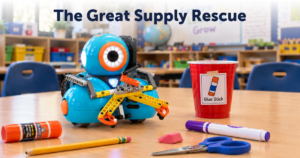
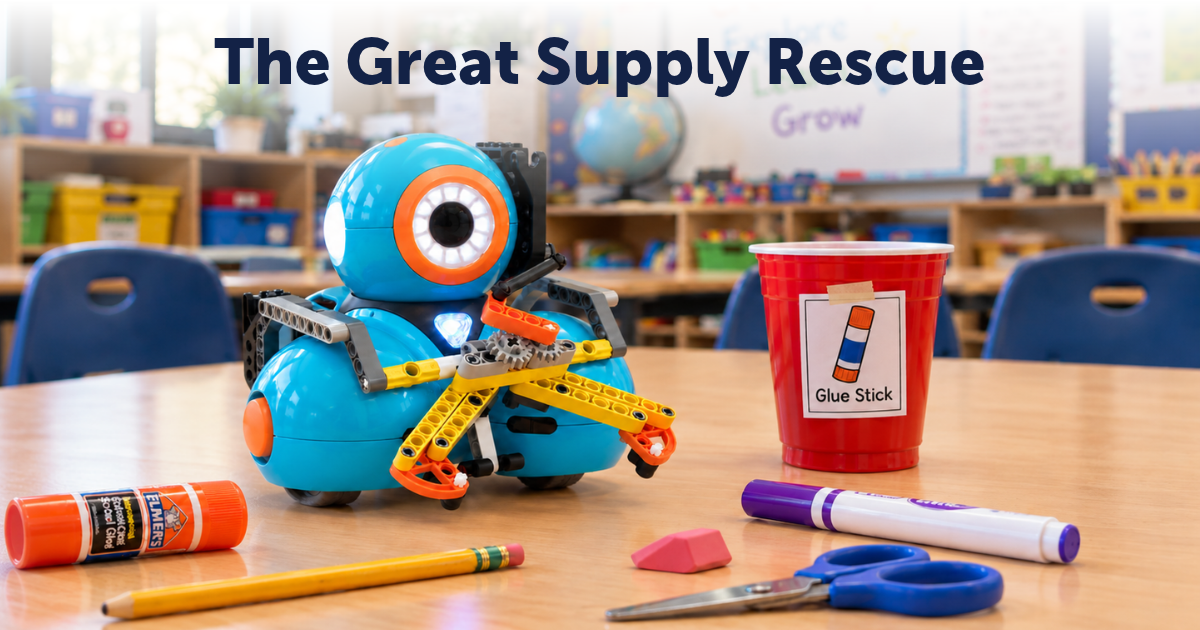
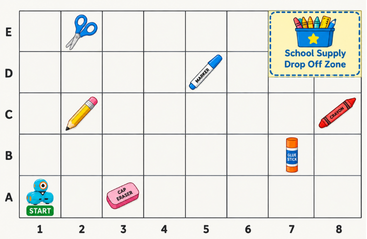
The Great Supply Rescue is a 40 to 50 minute Dash lesson for students ages 6 to 11 that combines coding, math, and language in a single mission. Small groups solve clue-card riddles to identify a school supply, estimate how far Dash needs to travel to reach it, and program Dash to deliver it to a drop-off zone. The complete lesson plan, clue cards, and supply image cards are available to download at the end of this post.
Estimation Becomes Visible
Estimating a distance asks students to hold a mental picture of length before they measure anything, and Dash gives that picture a way to be tested. When students enter a distance in centimeters and run their program, the robot shows them right away whether the estimate was too short, too long, or close. Each run produces new evidence, and students sharpen their sense of a centimeter with every attempt.
Turns follow the same pattern. A 90-degree turn that leaves Dash slightly off course gives students a concrete reason to think about angles as amounts of rotation, which is a more durable understanding than recognizing an angle on a worksheet.
Debugging as a Math Conversation
When Dash misses a supply, the lesson plan directs teachers to respond with questions rather than answers: Did Dash overshoot or fall short? How many centimeters do you need to add or subtract? Those two questions turn a missed target into a subtraction problem with a physical answer. Students compare where Dash stopped with where it needed to go, calculate the difference, and adjust a single number in their program.
This approach also scaffolds a productive relationship with mistakes. A first run that misses the target becomes an expected part of the process, and the correction comes from the students’ own reasoning.
Reading with a Purpose
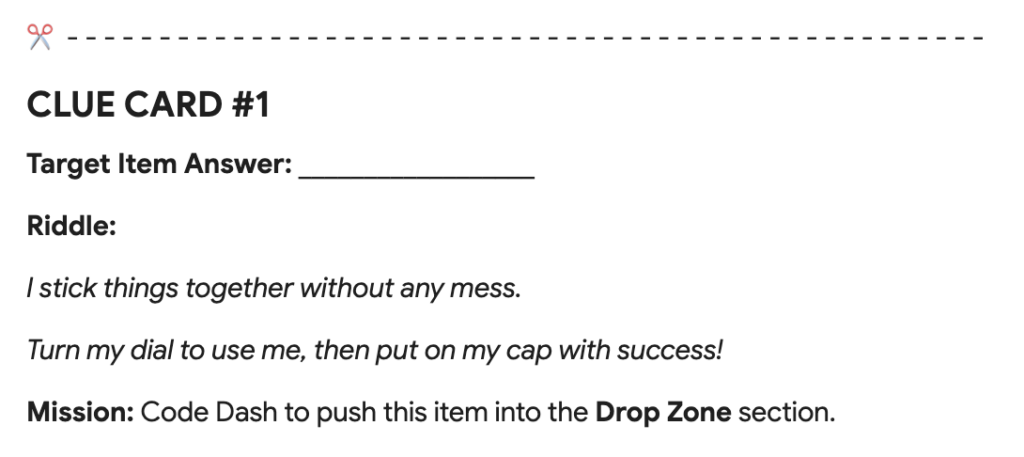
Each round begins with a clue card. Students read a riddle, decide which supply it describes, and then plan their route. Because a misread clue sends Dash to the wrong cup, reading comprehension becomes the first step of the engineering task, and students have a clear reason to read carefully.
A Role for Every Student
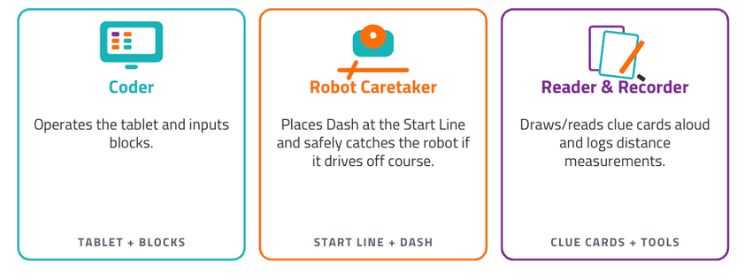
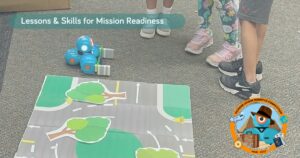
Groups work in three rotating roles. The Coder builds the program on the tablet, the Robot Caretaker places Dash at the start line and catches the robot if it drives off course, and the Reader and Recorder reads clues aloud and logs distance measurements. Rotating the roles ensures that every student codes, handles the robot, and records data during the lesson, and it gives teachers a simple structure for keeping several groups productive at the same time.
Adapting the Lesson Across Ages
Because the core program uses only drive and turn blocks, the lesson adapts easily across the 6 to 11 age range.
- Younger learners can focus on one delivery at a time, starting with a straight path before adding a turn.
- Older students can plan a route with several turns in a single program, or record each estimate alongside the actual distance and track how their accuracy improves over the session.
- Groups ready for an added challenge can use the optional Gripper so that Dash grips and carries each cup to the drop-off zone.
Download the Lesson
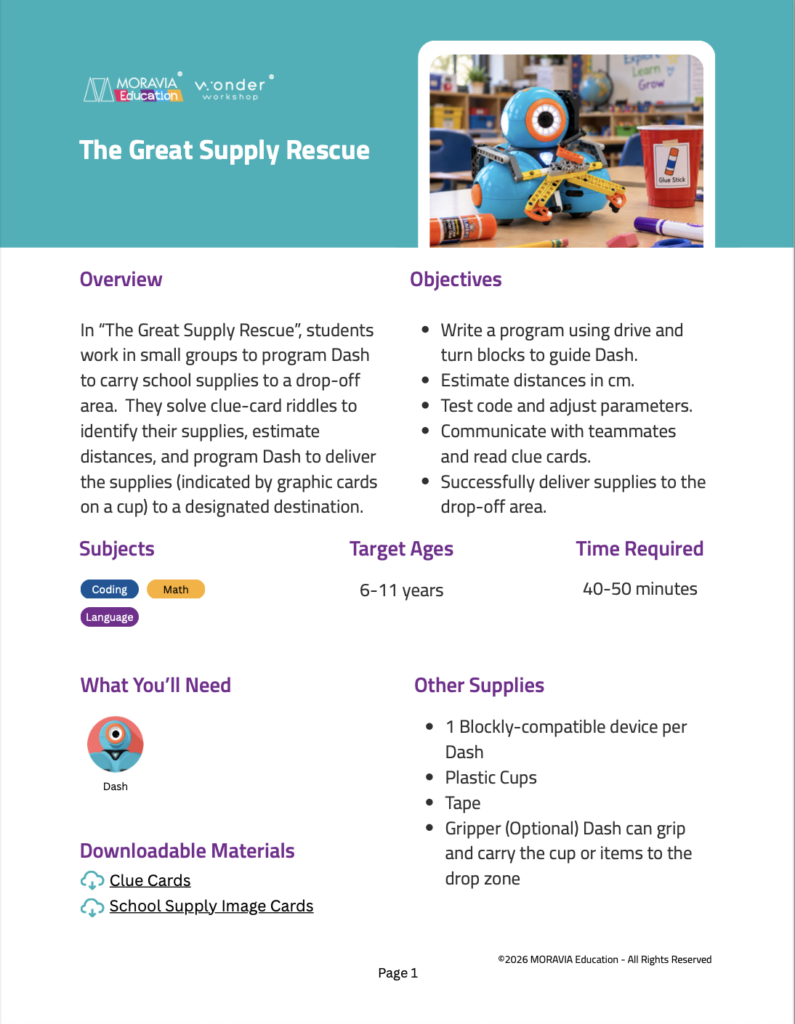
The Great Supply Rescue download includes the full lesson plan with preparation steps, a suggested floor layout, a short code demonstration, facilitation prompts, and reflection questions, along with five clue cards and a set of school supply image cards. To run the lesson, you will need Dash, one Blockly-compatible device per Dash, plastic cups, and tape.